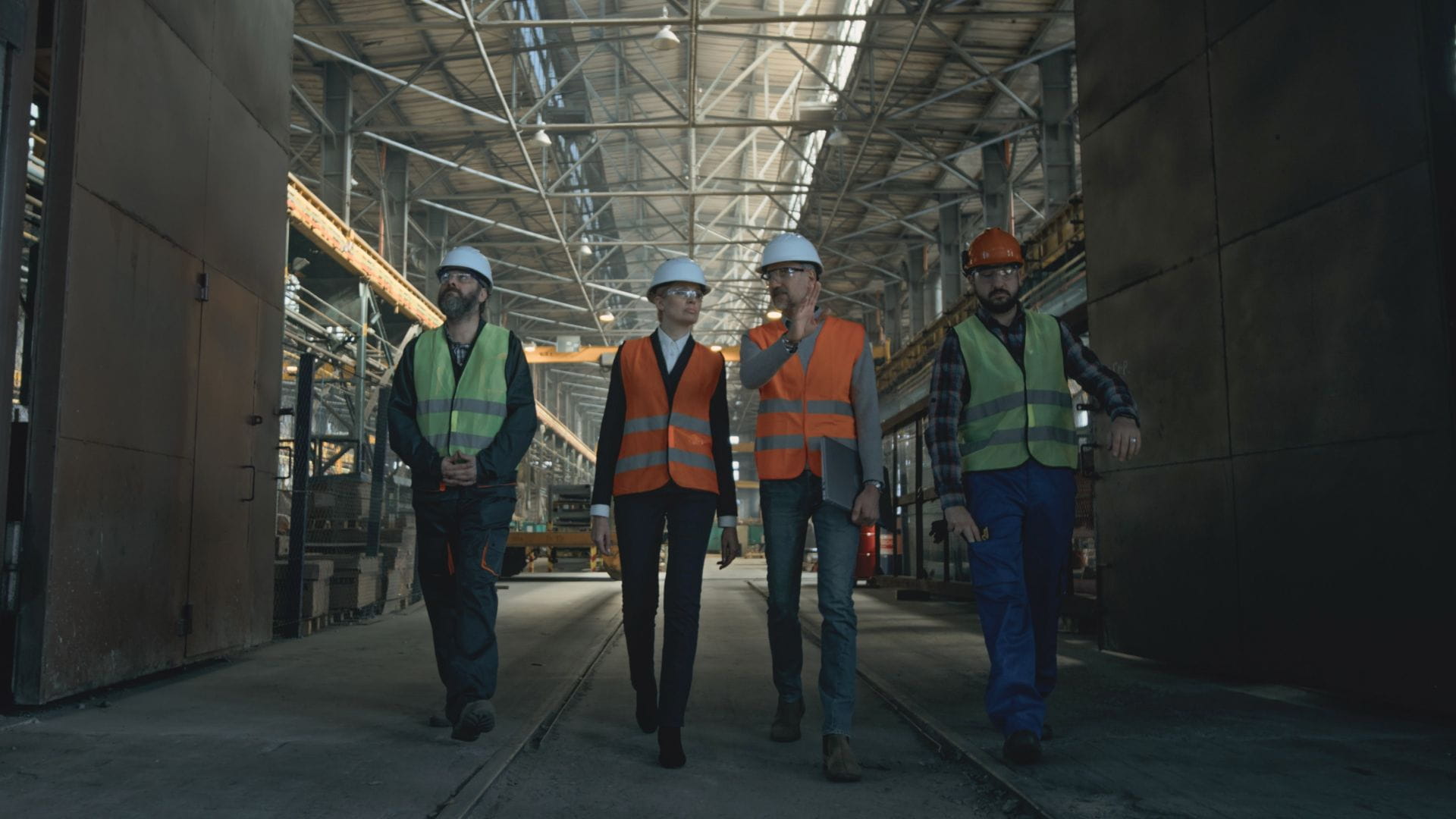
During a series of interviews with manufacturing leaders, an operations manager in the document and security paper vertical told us of a situation he experienced. They had a planning lead whom they could call at three in the morning, and he’d know the production schedule for the next four weeks from memory. If a machine stopped, a supplier was late, or a customer changed priorities, he knew exactly what had to move and what could stay where it was.
Then he retired.
Nothing broke, exactly. The systems still ran, the spreadsheets were still on the shared drive and the machines still turned over on Monday. What walked out of the building was the one person who knew how all of it fit together. They suddenly faced a single point of failure that happened to be a human being.
Which raises an uncomfortable question: when that person retires, calls in sick, or just takes a week off, who holds the plan?
Over the past months, that question kept coming up in different forms. It is also what led us to build the Production Planning Dashboard, as a shared view of the schedule that doesn't disappear when one person walks out of the building and helps you keep your delivery commitments.
Where does the data come from?
Factories already have the data and the systems recording it. A planner's morning starts the same way: get order data into Excel, clean it up, rearrange it and rebuild by hand the schedule from yesterday.
The file already contains most of the information required to build the day's schedule: orders, routings, materials, and due dates. The difference is that the planner no longer has to do that work by hand.
The same applies to other information already available in the plant. Shift schedules exist. Absences are recorded somewhere. Machine status information exists, whether it comes from machine signals, existing systems or manual updates.
The point of integrating the Production Planning Dashboard is to make the existing information visible in one place without major disruptions or the need for new equipment.
Plants lack capacity and budget for large implementation projects. During our research, several managers described running entire sites with a single IT person. Others were still working through ERP projects that had started years earlier.
Stopping to reorganise everything is easy to promise from outside the factory, but somebody still has to make deliveries while the project is running. Value must come quickly, and with as little rearrangement as possible.
What actually changes on the floor?
It’s Thursday, and a machine goes down at 08:00. The planner hears about it ten or twenty minutes later.
Then the replanning starts: with phone calls first, then shift leaders comparing notes, then checking machine capacity, who's actually in today. Three spreadsheets end up open on one screen. Eventually, a revised schedule goes out as a PDF.
"One domino falls, and 25 others have to be reset before the chain stands again," said an operations manager in the specialty chemicals sector.
Everyone sees the first problem. It’s as obvious as a machine suddenly not working on a Thursday morning. What takes time is understanding what moves next.
Let’s look at a different machine. Its corresponding system says that it’s free at 09:30. The schedule shows available capacity. On paper, there is no problem. But two qualified operators called in sick before the shift started.
The machine is free, and yet the operators are not.
The planning view that shows machine capacity, but not who's available to run it, shows only half the picture. Put the two together, and the planner can see the real options and their trade-offs: move the job, shift it to another workstation group, or accept that a delivery date is now at risk and say so early.
Most importantly, the planner remains the decision-maker. The system proposes an alternative. The planner approves it. Nothing changes on the floor until a human decides it should.
That principle came up repeatedly during our interviews. Managers were open to receiving recommendations. They were not interested in handing over responsibility for production decisions, nor should they.
The goal is to spare the planner from hours spent collecting information before making the decision they would have made anyway.
What does the rest of the team gain?
But a planning dashboard doesn’t only help the planners themselves. When the production plan becomes visible, the others feel it too.
The shift leader spends less time chasing updates because they can just look at one single screen. A new operator can understand the day's priorities without asking three different people. The production manager can answer a customer question about an order without having to check multiple systems and spreadsheets.
And most importantly, knowledge becomes shared instead of concentrated.
The plan no longer depends on one experienced planner carrying weeks of production logic in their head. The expertise stays where it belongs, with the people who understand the factory best. The shift leader and planner are working with the same data from the start. The production manager can see how the work is going in real time in a single dashboard. And if somebody calls in sick, everyone sees the same change instead of hearing about it one conversation at a time.
The whole team holds the plant and meets delivery commitments when the machines, systems and operators are connected
The data is already there. Plants already know their orders, their machine capacities, their shift schedules and who called in sick that morning. The experience is there, too.
The question is whether the people who need to act can see the same picture at the same time.
Because when the schedule lives in spreadsheets, ERP exports and one planner's experience, the factory becomes dependent on whoever happens to hold all those pieces together. But when the plan itself becomes visible, not locked up in one person’s head, the whole team can focus on their own work without worrying that an order will get stuck three steps ahead in the production process.
That is what we built the Production Planning Dashboard around, to make sure that when something changes at 08:00, everyone knows what to do by 08:15.
:format(webp))
:format(webp))
:format(webp))